
10 Essential Cocktail Garnishes – How to Garnish Cocktails at Home

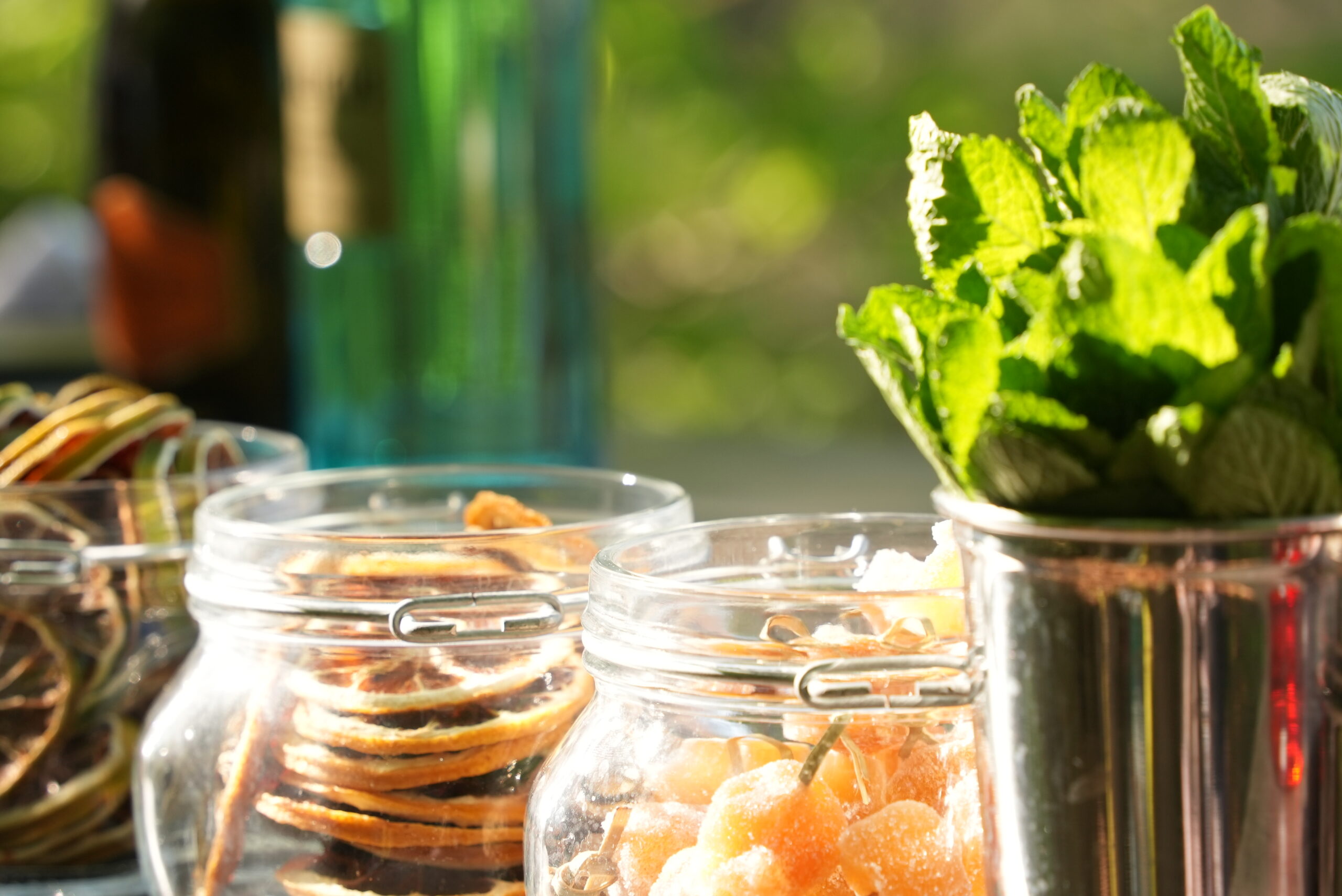
Cocktail garnishes at a bar in sunlight

10 Essential Cocktail Garnishes – How to Garnish Cocktails at Home

Garnish is often treated as decoration, but in good bartending it serves a clear purpose. A well-chosen garnish should complement the cocktail, adding aroma, balance, or a subtle hint of flavour.

At EOW we prefer a simple approach where less is more. Rather than large or overly decorative garnishes, we focus on elements that naturally belong in the drink. A citrus wedge releases fresh oils, mint adds aroma, and an olive reinforces the savoury profile of a cocktail like the Martini.

The best cocktail garnishes are thoughtful and connected to the ingredients already in the glass. When used well, they enhance the drinking experience without distracting from the cocktail itself.

Most garnishes fall into two categories: fresh garnishes, such as citrus, herbs, and fruit, and preserved garnishes, including dehydrated fruit, olives, cocktail cherries, and candied ingredients. Each serves a slightly different purpose, but both can add the final touch that completes a drink.

Fresh Garnish

Fresh garnishes are the most common in classic cocktails. They are typically cut directly from fresh fruit or herbs and added just before serving.

Their main role is to bring aroma and a subtle layer of freshness to the drink. Citrus, herbs, and fresh fruit are simple additions, but when used well they can highlight the flavours already present in the cocktail.

Because they are used at the moment of serving, fresh garnishes also give the drink a clean finish.

1. Citrus wedges

Orange wedge on cutting board for garnish

Citrus wedges are probably the most common of the cocktail garnishes. They are simple to prepare and easy to batch before a shift, which makes them a practical choice for bartenders.

They also work well as a versatile fallback garnish. Since many cocktails contain citrus, a wedge of the same fruit will usually complement the drink naturally.

There are different ways to cut wedges. Some bartenders trim off the ends of the fruit, while others leave them on. Both methods work and mostly come down to preference.

This is how we prepare it:

  • Cut the citrus in half lengthwise.
  • Cut each half lengthwise again to create wedges.

This will give you 4 wedges per half.

Cocktails with wedges

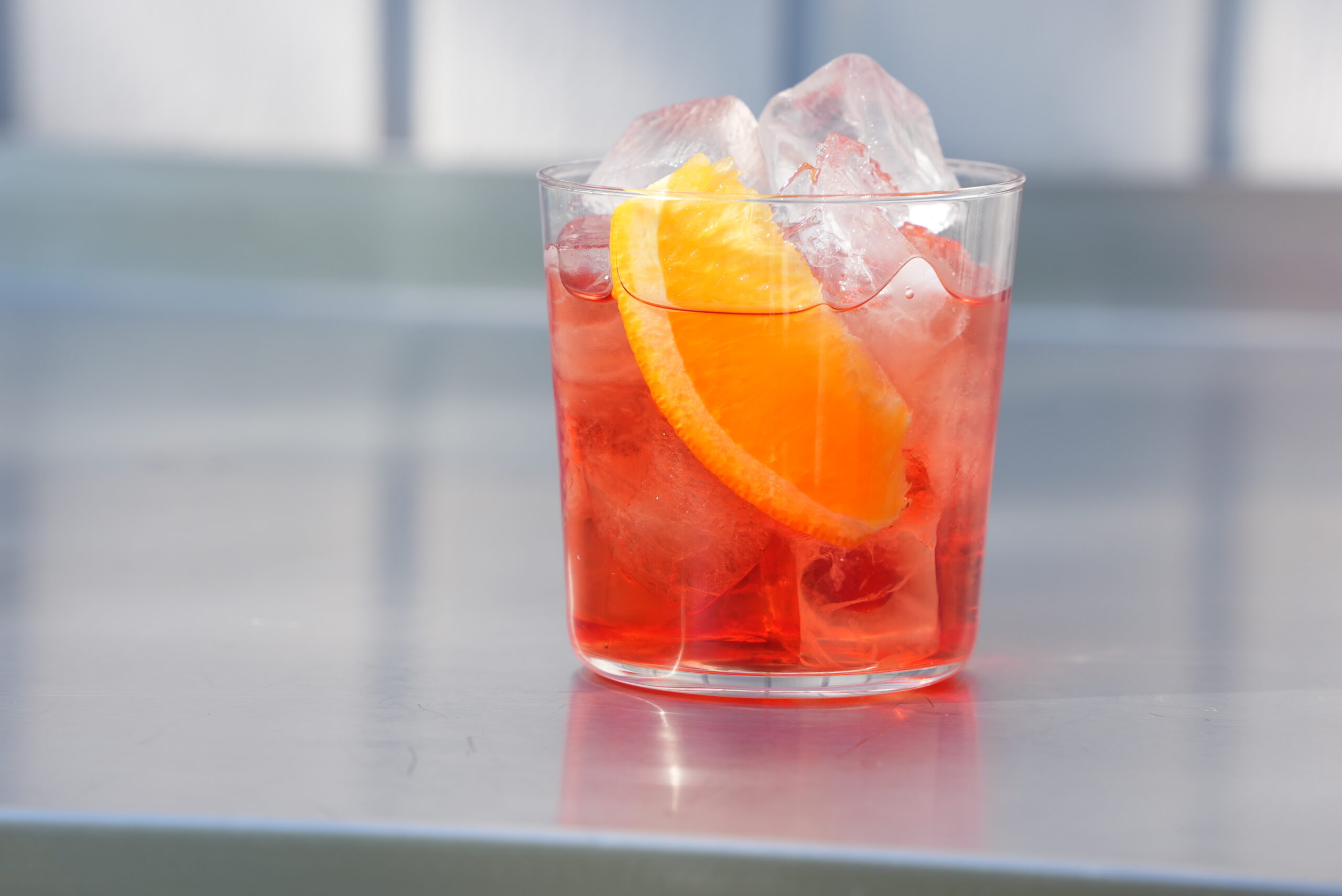
Citrus wedges are commonly used in refreshing highballs and spritz-style cocktails. They add a subtle citrus aroma and often match the citrus already used in the drink.

2. Slices

Citrus slices are essentially a thinner version of the wedge. While they can be used as a garnish, we generally prefer wedges as they are easier to handle and work better in most cocktails.

3. Zests and Coins

Citrus zests are made by cutting a thin strip of the outer peel of the fruit. Unlike wedges or slices, they are used for their aromatic oils rather than the juice.

When expressed over a cocktail, the oils from the peel add a bright citrus aroma that enhances the drink without changing its balance. This makes zests a common garnish in spirit-forward cocktails such as the Old Fashioned, Martini etc.

A coin is simply another variation of the zest. Instead of a long strip, the peel is cut into a small round or square piece. Coins are often used when a subtler garnish is preferred or when a smaller piece of peel fits the presentation of the drink better.

This is how we prepare them:

  1. Use a sharp knife or vegetable peeler to remove a thin strip of citrus peel.
  2. Try to avoid cutting too deep into the fruit.
  3. Trim the peel into a clean strip if needed.

The white layer underneath the peel, known as the albedo, can add bitterness, so it is best kept to a minimum. A thin strip of peel will release the most aroma and create a simple, elegant garnish.

Before serving, gently express the oils from the peel over the drink and place it in the glass. We avoid wiping the rim of the glass with the zest, as this can change the intended balance of the cocktail.


Cocktails with zests

Citrus zests are most commonly used in spirit-forward cocktails. When expressed over the drink, they release aromatic oils that enhance the aroma without altering the balance of the cocktail.

4. wheels

Citrus wheels are thin slices cut across the fruit, creating a full round shape that shows both the peel and the flesh. They are commonly used as a garnish in long drinks and spritz-style cocktails where a light citrus aroma complements the drink.

Compared to wedges, wheels are mostly used for their visual appearance and subtle aroma rather than for adding juice to the cocktail. Their simple shape also makes them easy to prepare and a practical garnish to batch before service.

5. Mint

Cocktail garnishes at a bar in sunlight

Mint is one of the most aromatic garnishes used in cocktails. Rather than adding flavour directly to the drink, it is mainly used for its fresh aroma.

When placed on top of the cocktail, the mint releases its scent as you bring the glass to your mouth. For this reason, it is best positioned close to the straw or the edge of the glass so the aroma is noticeable with every sip.

There are two common challenges when working with mint behind the bar. The first is using too much. Large or overly decorative mint bouquets can quickly become overwhelming and distract from the drink. The second is keeping mint fresh during service, as it wilts quickly if not stored properly.

When used sparingly and kept fresh, mint adds a clean and refreshing aromatic touch to a cocktail.

Cocktails with mint

Mojito with mint garnish in highball and cane sugar

Mint is commonly used in refreshing cocktails where its fresh aroma enhances the drinking experience. Classic examples include the Mojito and Mint Julep where the aroma of mint becomes an important part of the drink.

Preserved Garnishes

Not all cocktail garnishes need to be prepared fresh. Preserved garnishes are ingredients that can be stored for longer periods and prepared in advance. This makes them practical behind the bar, especially during busy service.

Common examples include dehydrated citrus, olives, cocktail cherries, and candied ingredients. While they may not provide the same freshness as a freshly cut garnish, they offer consistency and convenience while still complementing the drink.

When used thoughtfully, preserved garnishes can add both aroma and visual balance to a cocktail without requiring last-minute preparation.

1. Dehydrated citrus

Dehydrated citrus has become a popular garnish in modern cocktails. By slowly removing the moisture from citrus slices, the fruit develops a deeper colour and a firm texture.

Compared to fresh citrus, dehydrated slices are mainly used for their visual appearance rather than for adding flavour to the drink. They are also easy to prepare in batches and can be stored for long periods, making them a practical garnish for bars and home bartenders alike.

Because they are dry, dehydrated citrus is typically placed on top of the drink or rested on the rim of the glass as a simple finishing touch.

Cocktails with Dehydrated citrus

Dehydrated citrus is often used in modern cocktails as a simple finishing garnish. It adds visual contrast and works well in drinks such as the Dark and Stormy, and various highballs.


2. Olives

Olives are one of the most recognizable cocktail garnishes and are most commonly associated with the Martini. They add a subtle savoury element that complements the clean and spirit-forward character of the drink.

Typically, one or two olives are placed on a cocktail pick and rested in the glass. While simple, they provide both a visual finish and a small bite that pairs naturally with the cocktail.

Cocktails with Olives

Olives are most often used in cocktails such as the Martini and Dirty Martini, where their savoury character pairs naturally with the clean profile of the drink.

3. Candied ginger

Candied ginger is a simple preserved garnish that works well in cocktails with ginger flavours. It adds a small visual element and naturally connects to drinks that already contain ginger.

It is most often used in cocktails with ginger beer or ginger syrup, where the garnish reflects the ingredients already present in the drink. A small piece placed on a cocktail pick is usually enough to finish the cocktail without becoming distracting.

Cocktails with candied ginger

Moscow Mule

Candied ginger is commonly used in cocktails like the Moscow Mule and Dark and Stormy, where it naturally matches the ginger flavours already present in the drink.

4. Maraschino cherries

Lorem ipsum dolor sit amet, consectetur adipiscing elit. Ut elit tellus, luctus nec ullamcorper mattis, pulvinar dapibus leo.

Cocktails with maraschino cherries

Lorem ipsum dolor sit amet, consectetur adipiscing elit. Ut elit tellus, luctus nec ullamcorper mattis, pulvinar dapibus leo.

5. Coffee Beans

Lorem ipsum dolor sit amet, consectetur adipiscing elit. Ut elit tellus, luctus nec ullamcorper mattis, pulvinar dapibus leo.

Cocktails with coffee beans

Lorem ipsum dolor sit amet, consectetur adipiscing elit. Ut elit tellus, luctus nec ullamcorper mattis, pulvinar dapibus leo.

Other posts

If you liked reading about cocktail garnishes try some of our other recipes, how to guides etc.

No Comments

Post A Comment