24 Jul Our favorite Piña Colada recipe
The history of the Piña Colada
The Piña Colada is closely tied to Puerto Rico, where it became part of the island’s drinking culture and later its national identity. The most widely repeated origin story credits Ramón Marrero, a bartender at the Caribe Hilton in San Juan, with creating the drink in 1954. His aim was to capture the flavours of Puerto Rico in one glass, built around rum, coconut and pineapple. SAQ notes that the drink was later declared Puerto Rico’s national beverage in 1978.
Like many famous cocktails, the exact history has been debated. What matters for the drink itself is clearer. The Piña Colada became popular because it offers an immediate sense of place. Rum brings warmth, pineapple brings acidity and ripe fruit, while coconut gives the drink its unmistakable body.
That simplicity is also why the recipe needs care. There are only a few ingredients, so each one matters.
Related Recipe
Strawberry Daiquiri
With Bacardi Blanca, Strawberry and lime
Choosing the ingredients
Bacardi Oro
Bacardi Oro forms the backbone of this recipe. Unlike a white rum, its light ageing brings subtle notes of vanilla, toasted oak and caramel, giving the cocktail more depth without overpowering the fruit. Its smooth character works particularly well alongside coconut and banana liqueur.
If you substitute another rum, choose a lightly aged golden rum with a clean, balanced profile rather than a heavily spiced or dark rum.
Crème de Banane
Crème de Banane adds a delicate banana aroma that complements the pineapple rather than dominating the drink. The banana flavour should be subtle, providing extra fruit complexity and a slightly richer mouthfeel.
A quality banana liqueur makes a noticeable difference. Cheaper alternatives can taste artificial and overly sweet, masking the fresh tropical flavours.
Pineapple Juice
Pineapple juice provides the fresh, vibrant character that defines every Piña Colada. Its natural acidity balances the sweetness from the coconut and banana liqueur while adding bright tropical notes.
Fresh pineapple juice delivers the best flavour, but a high-quality chilled juice without excessive added sugar also produces excellent results.
Coco Lopez
Coco Lopez is the classic choice for Piña Coladas and one of the reasons the cocktail has its signature creamy texture. Unlike coconut milk or coconut cream, Coco Lopez is sweetened and specifically designed for tropical cocktails, giving the drink its rich body and unmistakable coconut flavour.
Shake or stir the can thoroughly before measuring, as the coconut solids naturally separate during storage.
Angostura Bitters
Just one dash of Angostura bitters brings surprising complexity to the cocktail. The bitters add subtle notes of clove, cinnamon and warm baking spices, helping to balance the sweetness while adding depth to the finish.
Although it is only a small ingredient, leaving it out noticeably changes the overall balance of the drink.
Garnish
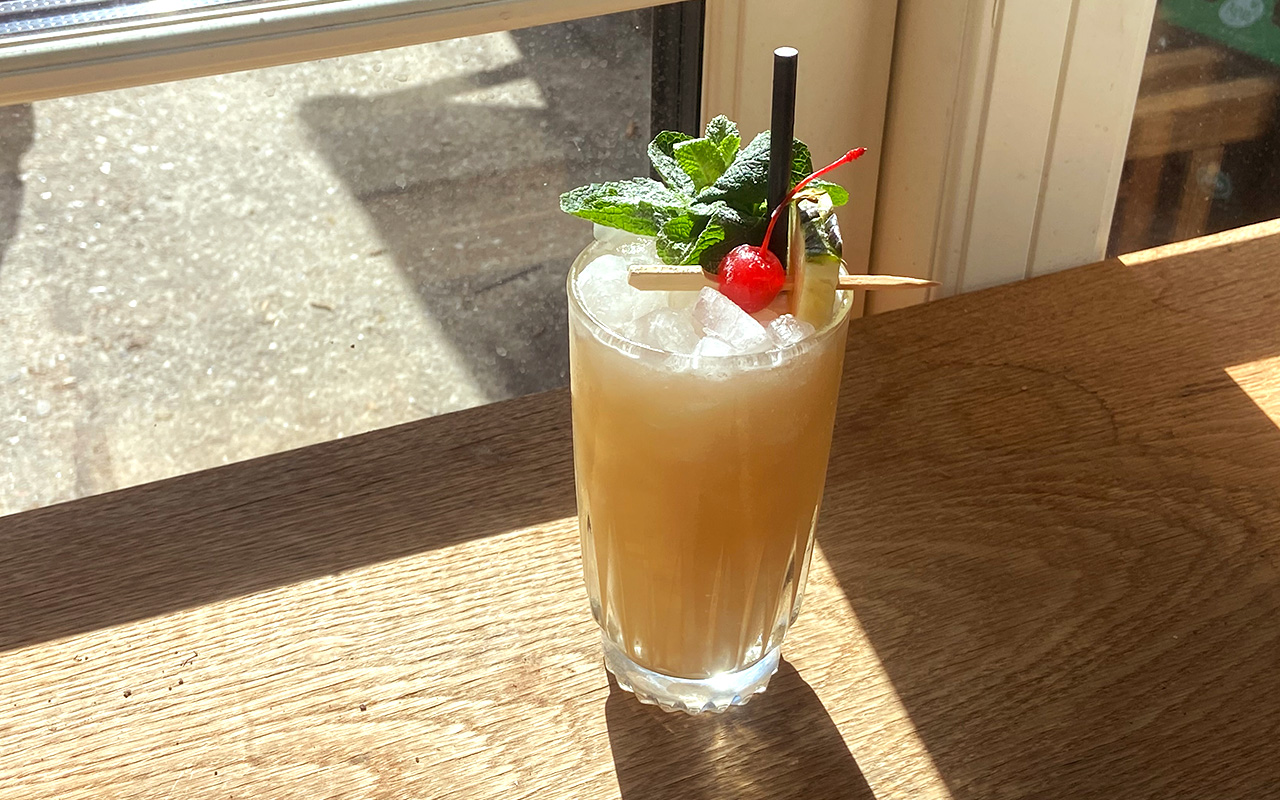
The Piña Colada is one of few cocktails where the more garnish you add the better.
We recommend a couple of mint sprigs, a cherry and icing sugar drizzled on top.


Piña Colada
Ingredients
Method
- Cut a triangle of pineapple, and place it in the skewer with the cocktail cherry.
- Add rum, creme de banane, Coco Lopez, pineapple juice and Angostura bitters to a shaker
- Fill the shaker with ice cubes
- Shake hard for 8-10 seconds
- Strain into a highball glass.
- Fill the glass with crushed ice.
- Add the straw, mint sprigs and pineapple and cherry on skewer.
- Drizzle icing sugar on top and serve.
What to Remember
- Keep it simple - Use fresh ingredients and quality spirits. Nothing more is needed.
Don't blend - Shake the cocktail instead, and serve it with lots of crushed ice.
Shake properly - A solid shake chills and dilutes the cocktail, bringing all elements into balance
FAQ
What is a Piña Colada made of?
This Piña Colada is made with Bacardi Oro, crème de banane, pineapple juice, Coco Lopez and a dash of Angostura bitters. Shaken with ice, it delivers a rich tropical flavour with a smooth, velvety texture.
Why does this recipe use Bacardi Oro instead of white rum?
Bacardi Oro adds subtle notes of vanilla, caramel and light oak that give the cocktail more depth than a white rum while still allowing the pineapple and coconut flavours to shine.
Can I use coconut cream instead of Coco Lopez?
You can, but the flavour and texture will change. Coco Lopez is a sweetened cream of coconut that gives this Piña Colada its signature richness. If you substitute unsweetened coconut cream, you'll likely need to add a little sugar syrup to maintain the balance.
What does crème de banane add to a Piña Colada?
Crème de banane contributes delicate banana notes that enhance the tropical character of the cocktail without overpowering the pineapple or coconut. It also adds a smooth, rounded sweetness.
Why add Angostura bitters?
A dash of Angostura bitters adds subtle spice and aromatic complexity. It balances the sweetness from the pineapple, Coco Lopez and banana liqueur, creating a more refined and well-rounded cocktail.
Why is this Piña Colada shaken instead of blended?
Shaking creates a lighter, silkier texture while keeping the flavours bright and refreshing. It also produces the slight froth that comes from shaking pineapple juice, giving the cocktail an elegant presentation without the heaviness of a frozen drink.
What type of ice should I use?
Shake the cocktail with cubed ice to chill and dilute it properly. Strain into a glass filled with crushed ice for the best texture and temperature.
What glass should I serve a Piña Colada in?
A hurricane glass is the traditional choice, but a highball or tiki glass also works well. Fill the glass with fresh ice before straining the cocktail.
Can I batch this cocktail for parties?
Yes. Combine the Bacardi Oro, crème de banane, pineapple juice and Coco Lopez in advance and keep the mixture chilled. Shake individual servings with fresh ice and add the dash of Angostura bitters just before straining for the best flavour and texture.
Other Recipes
Explore more classic cocktails below.

Carl-Ditlev is a bartender and co-founder of EOW Magazine, dedicated to keeping cocktails simple with quality spirits, fresh juice, and homemade syrups.
No Comments