Make the Espresso Martini like a Professional Bartender

Espresso Martini

Make the Espresso Martini like a Professional Bartender

The first time I tried an Espresso Martini, I was not impressed. I had heard so many people talk about it that I expected something special. Instead, I thought it was dull, tasted too much of vodka and was simply too sweet.

So why didn’t I like it?

Looking back, I know exactly why. The first time I made one myself, I used the cheapest vodka and coffee liqueur I could find. And instead of fresh espresso, I used instant coffee.

It is almost impossible to make a great cocktail if you compromise on the ingredients. With something as simple as an Espresso Martini, there is nowhere to hide.

A few years later, made properly and with quality ingredients, I finally understood the hype. Now I genuinely love a well-balanced Espresso Martini.

So without further ado. Let’s dive in and make our Espresso Martini

The story of the Espresso Martini

Few cocktails feel as unmistakably modern as the Espresso Martini. Unlike classics rooted in the nineteenth century, this drink was born in the creative energy of 1980s London, a time when the city’s bar scene was undergoing a quiet revolution.

The Espresso Martini was created by British bartender Dick Bradsell, one of the most influential figures in the revival of cocktail culture in the United Kingdom. During the 1980s, Bradsell worked at venues such as the Soho Brasserie and Fred’s Club, both of which were central to London’s emerging nightlife culture. At a time when cocktails had fallen out of fashion in much of Britain, Bradsell helped reintroduce balance, technique and creativity behind the bar.

The origin story has since become part of modern cocktail folklore. One evening at the Soho Brasserie, a young woman approached Bradsell and asked for a drink that would wake her up and give her energy while still delivering the effect of alcohol. With an espresso machine positioned directly behind the bar, Bradsell combined vodka, freshly pulled espresso, coffee liqueur and sugar syrup. He shook the mixture hard over ice to create a chilled cocktail with a natural layer of crema on top. The result was bold, structured and unexpectedly elegant.

The drink was first known as the Vodka Espresso, a straightforward description of its ingredients. Bradsell later referred to it as the Pharmaceutical Stimulant, reflecting both its caffeine content and his playful naming style. As cocktail culture evolved through the late 1980s and early 1990s, the name Espresso Martini took hold. The term ā€œmartiniā€ had by then become shorthand for any spirit-forward cocktail served in a V-shaped glass, even when it contained neither gin nor vermouth.

Although relatively young compared to many classic cocktails, the Espresso Martini quickly gained international recognition. Its appeal was rooted in contrast. It was rich yet refreshing, bitter yet slightly sweet, stimulating yet indulgent. It bridged the gap between after-dinner coffee and late-night cocktail, making it particularly suited to urban nightlife.

In the early 2000s, the cocktail saw a brief decline as minimalist drinks and spirit-forward classics regained popularity. However, the global rise of specialty coffee culture and the renewed interest in craft cocktails led to a strong resurgence during the 2010s. Social media also played a role. The dramatic crema and the traditional garnish of three coffee beans gave the drink visual appeal that translated perfectly into the digital age.

Today, the Espresso Martini remains one of the most ordered cocktails worldwide. It stands not only as a symbol of modern mixology, but also as part of Dick Bradsell’s lasting legacy. What began as a spontaneous response to a late-night request has become a fixture of contemporary bar culture.


Bartending hands pouring dom benedictine into cobber jigger

Choosing the ingredients

Vodka:

Although the espresso martini recipe can be made with many different vodkas, we use Grey Goose as the base spirit.

Grey Goose offers a clean and rounded profile with a smooth texture that integrates naturally with espresso and coffee liqueur. In a cocktail built on strong roasted notes and sweetness, structure matters more than sharpness. A refined vodka ensures the drink remains balanced rather than aggressive.

While more affordable vodkas can certainly be used, lower-quality spirits often introduce harsh edges that disturb the harmony between bitterness and sweetness. In an espresso martini, where the ingredients are few and clearly defined, the base spirit still plays a decisive role.

Even though espresso and coffee liqueur dominate the profile, the vodka remains fundamental to the structure of the drink. In an espresso martini, where the ingredient list is short and precise, the base spirit shapes the texture and overall balance. A well-made vodka ensures clarity and consistency from the first sip to the last.

Ā 

Coffee Liqueur:

While KahlĆŗa is widely used, Lucano Anniversario Cordial Coffee offers a deeper roasted profile with gentle notes of chocolate and vanilla. The liqueur binds the cocktail together and contributes richness without overwhelming sweetness.

Espresso:

Freshly brewed espresso is essential. Brew it just before shaking to preserve its crema. Instant coffee or weak substitutes will not create the signature foam that defines the best espresso martini.

Vanilla sirup:

We recommend making all sirups homemade, because it allows you to control the flavors and ensures a cleaner result than most storebought sirups.

Garnish

You may garnish the espresso martini with three coffee beans if desired. However, the cocktail is complete on its own. Its appeal lies in the balance of espresso, spirit and crema, and it does not require additional decoration.

Espresso Martini

This Espresso Martini recipe combines Grey Goose vodka, coffee liqueur and fresh espresso for a smooth, well-balanced cocktail with rich coffee flavor and signature foam.
Prep Time 5 minutes
Build time 5 minutes
Total Time 10 minutes
Servings: 1 cocktail
Course: Drinks
Cuisine: British
Calories: 102

Ingredients
  

The Cocktail
  • 2,5 Cl Vodka
  • 2,5 Cl Coffee Liqueur
  • 5 Cl Espresso Freshly brewed
  • 0,5 Cl Vanilla Syrup Preferably homemade
Garnish
  • 3 Coffee beans optional

Equipment

  • 1 Shaker
  • 1 Strainer
  • 1 Fine strainer optional
  • 1 Martini / cocktail glass
  • 1 Jigger

Method
 

Preparation
  1. Chill your martini or coupe glass with ice or place it in a freezer. Remove the ice from the glass before serving.
  2. Brew the espresso
Instructions
  1. Add vodka, coffee liqueur, espresso and vanilla syrup to a shaker
  2. Fill the shaker with ice
  3. Shake hard for 8-12 seconds
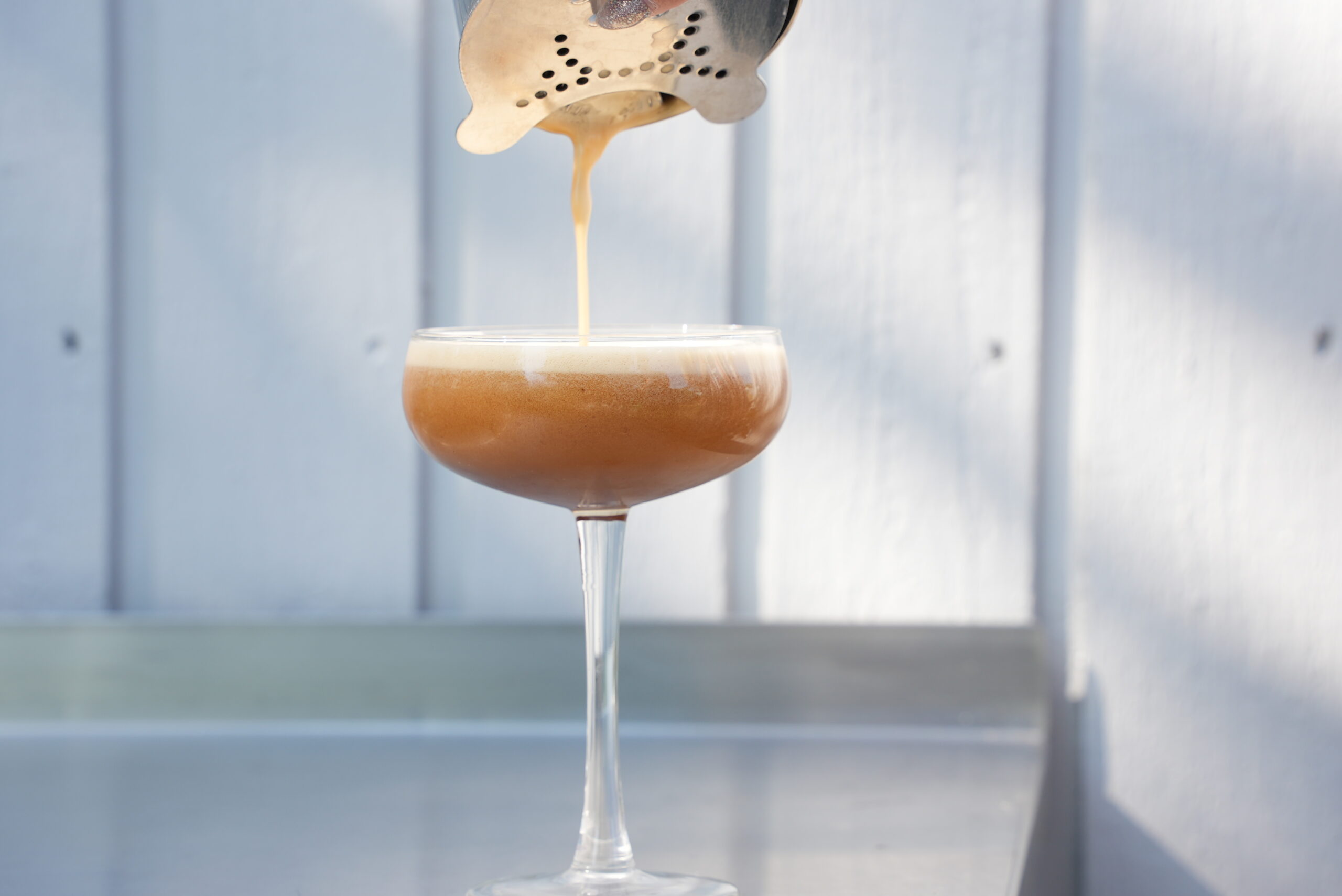
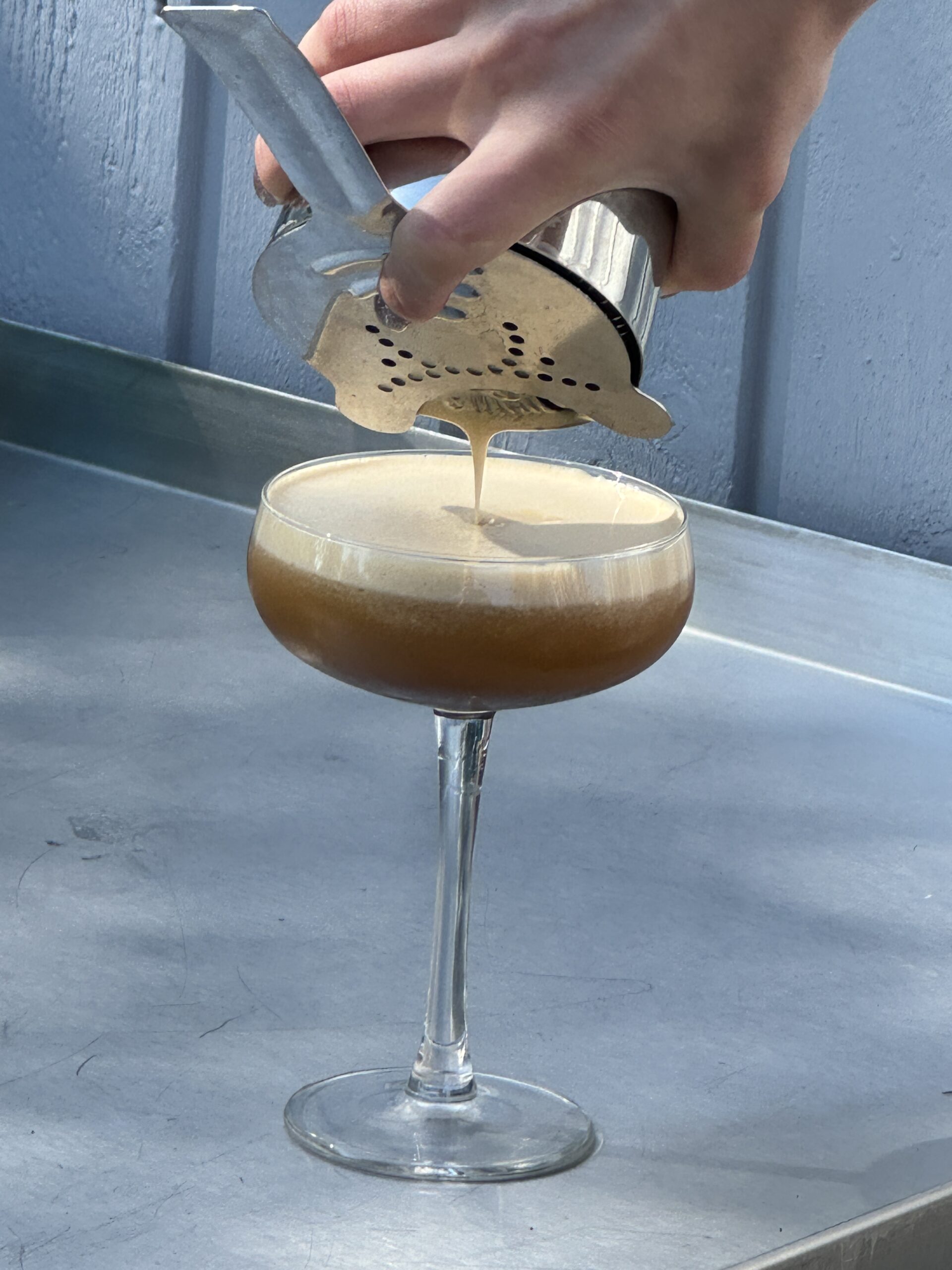
  4. Double strain into a chilled cocktail glass.
  5. Place the three coffee beans as garnish

Common Mistakes

The foam is created when the espresso is properly aerated. A weak shake results in a thin surface and a flat texture.

What to Remember

  • Keep it simple - Use fresh ingredients and quality spirits. Nothing more is needed.
  • Double strain the Espresso Martini - It removes ice shards and gives a cleaner finish

  • Chill the cocktail glass - A cocktail served without ice, it warms quicly. A chilled glass prevents that.
  • Use fresh espresso - The crema is essential for texture and presentation.

  • Shake with intention - Strong aeration creates the creamy foam.

FAQ

  • What glass should I use for serving? - Serve the Espresso Martini in a chilled martini og cocktail glass. It's always served straight up, without ice.
  • Can I use a different coffee liqueur than Lucano Caffe? - Yes. Lucano Caffe is the best choice, but other coffee liqueurs works well too. However you may have to adjust the sweetness of the cocktail.
  • What is the alcohol percentage of an Espresso Martini? - The alcohol percentage in an Espresso Martini typically ranges between 13 - 18 % ABV, depending on dilution and proportions.
  • What gives the Espresso Martini its foam? - The foam comes from freshly brewed espresso. When shaken vigorously with ice, the natural oils and crema in the coffee are aerated, creating the signature layer on top. Proper shaking and fresh espresso are essential for a stable, dense foam.
No Comments

Post A Comment
Recipe Rating