

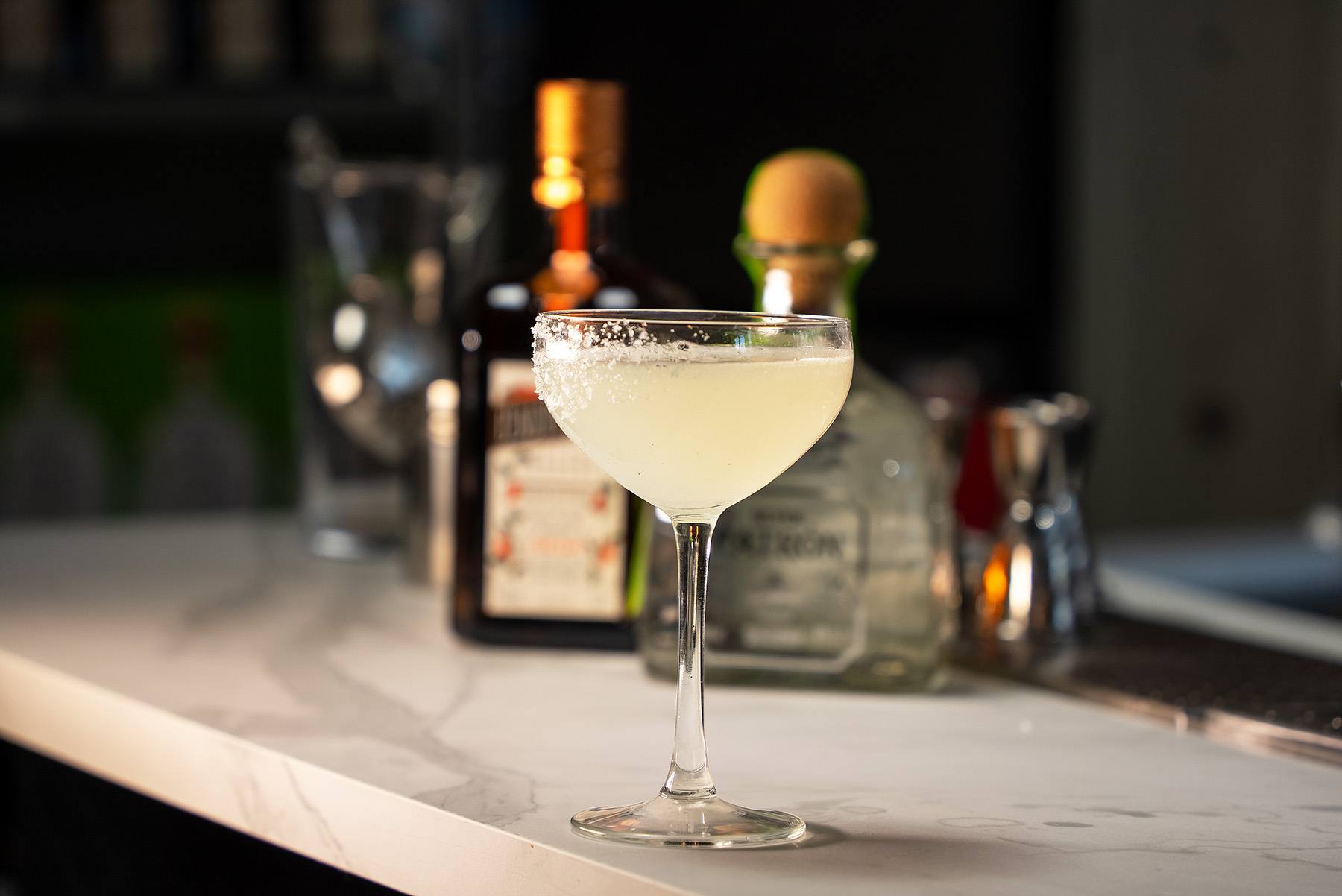
Classic Margarita recipe

The real Margarita recipe at EOW Magazine

Classic Margarita recipe

I think many people have had bad experiences with tequila, myself included. The first time I tried it was at a bar where you could get ten tequila shots for 50 DKK, about 8 dollars. It was an easy way to get drunk, but it tasted terrible. At the time I honestly thought tequila was a terrible spirit. It just shows how wrong you can be, because today it is probably my favorite spirit.

What changed was that I eventually tried real 100 percent blue agave tequila. It was a completely different experience.

I know this recipe is about the Margarita, not tequila. But one of the most important ingredients in a Margarita is tequila. If you plan to make a Margarita with tequila mixto, you might as well stop reading here. This is not about being a snob. It is about making delicious cocktails, and that simply is not possible with poor quality ingredients.

This is the classic recipe for a real Margarita. Enjoy.

The story of the Margarita

The Margarita is one of the most disputed cocktails in history.

Several bartenders in Mexico and the United States have claimed to invent it during the 1930s and 1940s. Carlos ā€œDannyā€ Herrera in Tijuana is often mentioned. Margarita Sames in Acapulco is another name frequently tied to the story. There are even versions involving Hollywood guests and improvised tequila twists on existing cocktails.

Like many classics, the exact origin is blurred. The Margarita was likely not invented in a single moment, but shaped over time.

What we do know is this.

The Margarita follows the structure of the Daisy, a family of drinks popular in the late nineteenth and early twentieth century. The formula was simple and effective: a base spirit, fresh citrus and an orange liqueur, sometimes supported by a touch of sweetness. The word Margarita literally translates to Daisy in Spanish, which makes the connection more than coincidence.

As tequila production expanded in the early twentieth century and American tourism to Mexico increased, the Daisy formula found a new identity. Tequila replaced brandy or whiskey. Lime gave the drink brightness and bite. Orange liqueur rounded the edges and made it accessible. The result was sharper, cleaner and perfectly suited to warm climates.

By the 1940s the Margarita had begun appearing on cocktail menus in border towns and coastal resorts. In 1953 it was featured in Esquire magazine as Drink of the Month, which helped bring it into mainstream American cocktail culture.

What started as a regional tequila cocktail became one of the most ordered drinks in the world.

Its success lies in its simplicity. Three core ingredients. No excess. No disguise.

And yet that simplicity is exactly why it is so often made poorly.

When a cocktail contains only tequila, orange liqueur and lime, every detail matters. The tequila must be clean. The lime must be fresh. The balance must be precise. There is no room for heavy sweetness or lazy shortcuts.

Bartending hands pouring dom benedictine into cobber jigger

Choosing the ingredients

Tequila:

The most important rule is simple.

Use a 100 percent blue agave tequila.

Anything labelled ā€œmixtoā€ contains added sugars and will taste harsh or flat in a Margarita. The drink relies on clean agave character and natural peppery notes. Without that, it becomes sweet and unstructured.

We use Patrón Silver.

It is a clean, well made blanco tequila with balanced citrus and light pepper notes. It brings structure without overpowering the lime, and it keeps the drink crisp rather than heavy.

There are other excellent 100 percent blue agave tequilas on the market, but the principle remains the same. Quality blanco tequila is not optional in a Margarita. It is the foundation.

Triple Sec:

We use Cointreau.

It is technically a triple sec, but it stands apart for its clarity and balance. It delivers bright orange character without becoming syrupy, and it integrates cleanly with tequila and lime.

Other dry triple secs can work. Just avoid overly sweet or artificial versions. The orange liqueur should support the drink, not dominate it.

Lime juice:

Fresh lime is non negotiable.

Bottled juice flattens the drink and removes the sharp acidity that defines a proper Margarita. Squeeze it fresh, strain it, and use it immediately

Simple sirup (optional):

A classic Margarita does not require additional sweetness.

However, if you prefer a slightly softer profile, you can add a small amount of simple syrup. Start with 0.5 to 1 cl and adjust carefully. The goal is balance, not sugar.

We recommend making all sirups homemade, because it allows you to control the flavors and ensures a cleaner result than most storebought sirups.

Garnish

Salt is optional, but when used correctly it enhances both sweetness and acidity. A light half rim is usually enough. The goal is balance, not a mouthful of salt.

The real Margarita recipe at EOW Magazine

Margarita

Classic Margarita recipe with tequila, Cointreau and fresh lime juice. Clean, balanced and properly shaken.
Prep Time 3 minutes
Build time 5 minutes
Total Time 8 minutes
Servings: 1 cocktail
Course: Drinks
Cuisine: Mexican
Calories: 150

Ingredients
  

The Cocktail
  • 4 Cl Tequila blanco 100 % blue agave
  • 2 Cl Cointreau
  • 2 Cl Lime Juice Freshly squezed
  • 1 Cl Simple Syrup optional for sweetness
Garnish
  • Sea Salt for salt rim
  • 1 Lime wedge for salt rim

Equipment

  • 1 Jigger
  • 1 Shaker
  • 1 Strainer
  • 1 Martini / cocktail glass

Method
 

Preparation
  1. Chill your martini or coupe glass with ice or place it in a freezer. Remove the ice from the glass before serving.
  2. Add the sea salt to a plate and cut a lime wedge
Instructions
  1. Add tequila, cointreau, lime juice and simple syrup to a shaker.
  2. Run the lime wedge around half the rim of the glass and dip lightly into the salt. Discard the ice if you used it to chill the glass.
  3. Add ice to the shaker.
  4. Shake for 8-12 seconds.
  5. Strain into the cocktail glass.

Common Mistakes

Avoid adding to much sugar in the Margarita. It's supposed to be fresh not sweet.

What to Remember

  • Keep it simple - Use fresh ingredients and quality spirits. Nothing more is needed.
  • Balance sweetness carefully - It should be bright, not sugary.

  • Chill the cocktail glass - A cocktail served without ice, it warms quicly. A chilled glass prevents that.

FAQ

  • What glass should I use for serving? - Serve the Margarita in a chilled martini og cocktail glass. It's always served straight up, without ice.
  • Can I use a different orange liqueur than Cointreau? -Yes. Cointreau is the best choice, but other triple secs works well too. You can also use Grand Manier for a deeper flavor in the cocktail
  • What is the alcohol percentage of a Margarita? - The alcohol percentage in a Margarita typically ranges between 18 - 23 % ABV, depending on dilution and proportions.
  • What tequila should I use for a Margarita? - Use a 100 % blue agave tequila blanco like Patron.Ā Ā 
Sources

patrontequila.com

diffordsguide.com

Literature:

Death & Co. – Modern Cocktail Classics

No Comments

Post A Comment
Recipe Rating