


25 Feb Bartending Essentials – 10 Secrets to Make Your Cocktails Stand Out

Bartending
It took me 14 years behind the bar to get accustomed to the workflow I use today.
Learning to make drinks takes time. Learning to make many drinks at the same time takes even more.
Most cocktails fail for predictable reasons. They are diluted, warm, unbalanced or rushed. The truth is simple: technique matters more than complexity. A two-ingredient drink made with precision will always outperform a ten-ingredient drink made casually.
I’ve condensed my experience down to the 10 most important skills you need to know to when making proper cocktails.
Here are the principles that separate average cocktails from exceptional ones.
1. Cool Down Your Glass
Temperature is structure.
A cocktail poured into a room-temperature glass immediately begins to lose its edge. Ice melts faster. Aromatics flatten. Texture softens.
Chill your glassware in the freezer or fill it with ice and water while you prepare the drink. Dump the ice just before pouring. A cold vessel preserves balance and buys you time.
2. Fill Everything All the Way With Ice
Making a Dark and Stormy?
Fill it with ice cubes..
Making a Paloma?
Fill it with ice cubes..
Adding ice to your shaker?
…You guessed it.
Half-filled shakers are the silent killer of good cocktails.
Ice controls dilution. The more ice you use, the more stable the temperature and the more controlled the dilution. A properly filled shaker chills faster and melts less ice proportionally.
Fill your shaker completely. Fill your serving glass completely. Ice is not decoration. It is a structural ingredient.
3. Use Clear Ice Whenever Possible
Cloudy ice contains trapped air and impurities. It melts faster and looks careless.
Clear ice melts slower, feels denser and elevates presentation instantly. In spirit-forward drinks especially, slow dilution protects flavor integrity.
Clarity signals intention.
4. Garnish on Top — Not Drowning Below
A garnish should greet the nose before the palate.
When a glass is filled properly with ice, citrus wedges, herbs or skewered fruit sit proudly on top. When the ice level is low, garnishes sink and disappear into the drink.
Aromatic impact matters. Structure the ice so the garnish remains elevated.
5. Serve When It’s Meant to Be Drunk
A cocktail has a life cycle measured in minutes.
Serve it when the guest is ready. It is better that people wait five minutes for a drink than the drink waits five minutes for people. A Daiquiri that sits is no longer a Daiquiri. A carbonated drink loses energy with every passing second.
Precision includes timing.
6. Pre-Cut Your Garnish
Efficiency preserves quality.
Cut lime wedges before service. Peel orange zest in advance. Skewer cherries ahead of time. When you prepare garnishes during service, you rush. When you rush, you compromise.
Preparation creates calm. Calm creates better drinks.
7. Avoid Premade Syrups and Artificial Products
This will upset some brands, but it must be said.
Mass-produced syrups often contain stabilizers, artificial colorants, preservatives and unnecessary additives. They flatten flavor and add unwanted sweetness.
Make your own simple syrup. It takes minutes: equal parts sugar and water, gently heated until dissolved.
Fresh ingredients taste alive. Industrial shortcuts taste engineered.
8. Measure Twice, Pour Once
Guessing is not confidence. It is gambling.
Use a jigger. Precision ensures repeatability. Repeatability builds mastery. Even experienced bartenders measure consistently because balance is fragile.
Cocktails are chemistry in a glass. Respect the specs.
9. Place the Straw Where the Garnish Is
This is subtle but powerful.
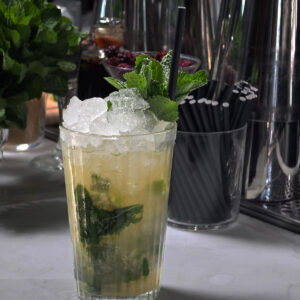
Position the straw next to the garnish so the guest experiences aroma with every sip. Mint, citrus oils and herbs should meet the nose simultaneously with the palate.
Flavor is not just taste. It is aroma plus temperature plus texture.
10. Use Fresh Citrus — Always
Fresh lime, lemon, orange and grapefruit juice define structure in modern cocktails.
Pasteurized lime juice is a compromise. It tastes flat and slightly bitter. Fresh citrus delivers brightness and natural acidity that cannot be replicated industrially.
Cranberry and pineapple juice can be purchased if quality is high. Citrus cannot.
The difference is immediate and undeniable.
Final Thought
A great cocktail is rarely about innovation. It is about execution.
Cold glass. Abundant ice. Fresh citrus. Proper timing. Clean structure.
Small details compound. Guests may not identify each element consciously, but they feel the difference instantly.
Craft is quiet. Precision is invisible. Excellence, however, is unmistakable.

Alexander Bøgild started his career within the bar industry back in 2012. He has worked at numerous cocktail bars, restaurants and hotels in Copenhagen, London and New York.
No Comments